← Back to symptom navigator

SYMPTOM → WHAT DO I DO?

Coughing

Look for breathing effort, exposure history and whether the cough follows exercise or eating.

CALL YOUR VETERINARIAN PROMPTLY
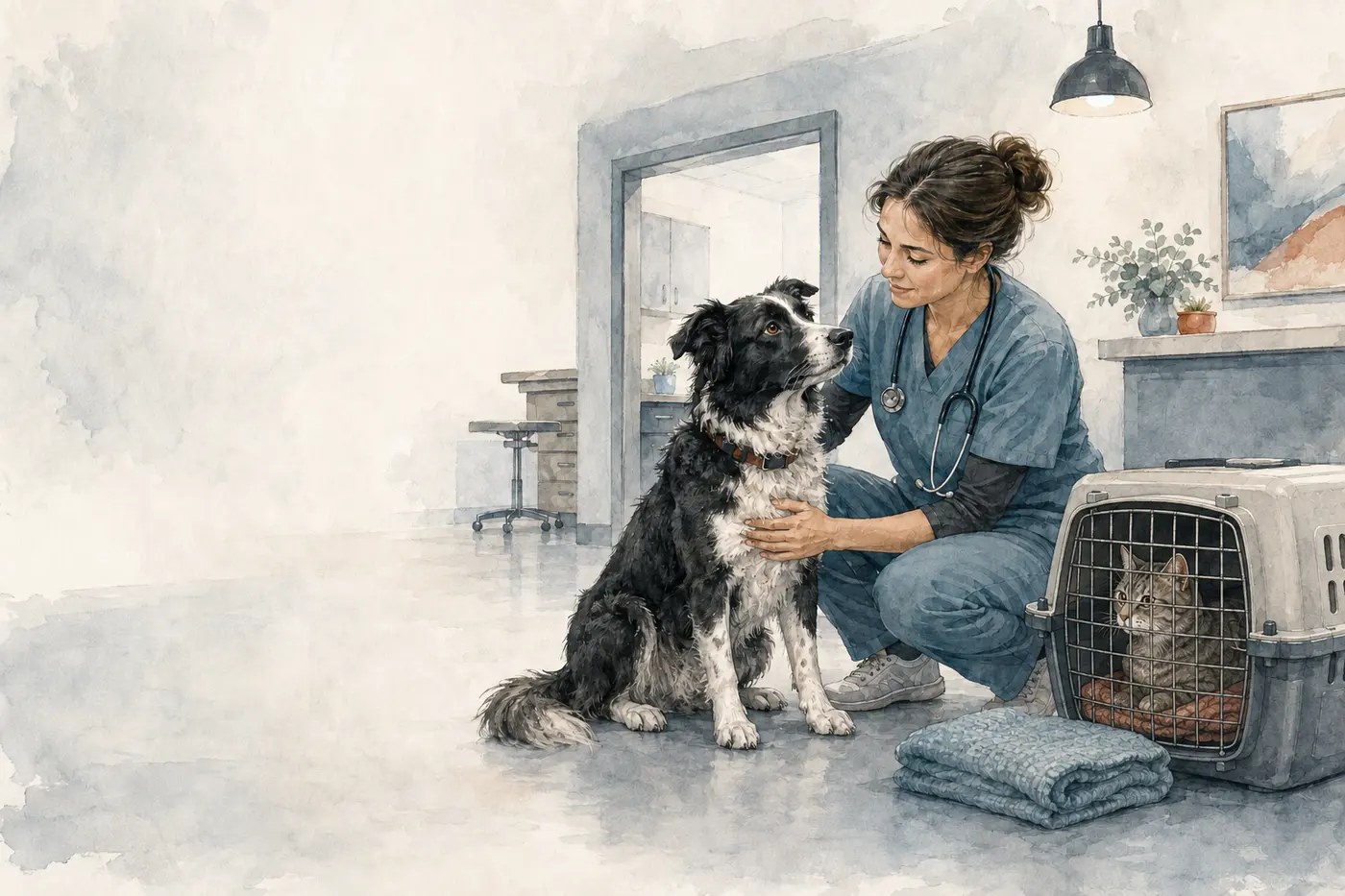
Illustration of a dog and cat arriving for emergency veterinary care
OWNER VISUAL GUIDEBreathing difficulty, collapse, seizures, major bleeding and abnormal gum color can require immediate emergency care. This educational illustration is not a diagnostic image.

READ THIS FIRST

Observations can help your veterinarian. They cannot rule out an emergency.

Contact an emergency veterinary facility immediately for difficult breathing, collapse, ongoing seizures, inability to urinate, major bleeding, abnormal gum color, sudden severe abdominal swelling or rapidly worsening weakness.

01 · POSSIBLE CAUSES

What could be behind this symptom?

These are possibilities, not a diagnosis. The right explanation depends on the examination, species and medical history.

  • Infectious respiratory disease, airway irritation or collapsing airway
  • Heart disease, heartworm disease, asthma or fluid in the lungs
  • Foreign material, aspiration, pneumonia or environmental smoke
  • Parasites, chronic airway disease or an underlying mass
02 · WHAT YOU CAN OBSERVE

What can you safely check at home?

Write down what you see and bring photographs or video only when doing so does not delay care.

  • Frequency, whether the cough is dry, wet, honking or followed by retching
  • Breathing rate and effort while resting
  • Exercise tolerance, appetite, fever-like behavior and recent boarding or exposure
  • Whether coughing occurs after drinking, eating, lying down or pulling on a collar
03 · WHAT NOT TO DO

Avoid actions that can make things worse.

  • Do not give human cough medicine, leftover antibiotics or essential oils.
  • Do not exercise an animal that is coughing or breathing hard.
  • Do not use a tight collar or expose the animal to smoke.
  • Do not assume a cat coughing is merely trying to pass a hairball.
04 · WHEN TO CALL

When should you contact your veterinarian?

  • Call promptly if coughing persists, interrupts sleep, follows exercise or occurs with lethargy.
  • Mention exposure to other animals, heartworm prevention history and known heart disease.
  • Keep a short video if recording does not delay care.
05 · WHEN IT IS AN EMERGENCY

Get emergency help immediately if you see:

  • Open-mouth breathing in a cat, blue or pale gums, collapse or marked breathing effort
  • Coughing blood, severe weakness or inability to settle
  • A choking episode, suspected inhaled object or sudden respiratory distress
Open the emergency action guide →
06 · SPECIES-SPECIFIC CONCERNS

The same symptom can mean different things in different animals.

Cats

Coughing can indicate feline asthma, heartworm-associated respiratory disease or other serious lung problems.

Birds

Tail bobbing, open-mouth breathing and voice changes are urgent even if the bird is still perched.

Domestic equines

Fever, nasal discharge or multiple coughing horses raise infectious-disease and biosecurity concerns.

Related Resources

Heartworm Disease in DogsHeartworm Disease in CatsHeart diseaseFeline asthmaChest radiographsDiagnostic testing library
TRUSTED SOURCES

Sources behind this guidance

American Veterinary Medical AssociationFirst aid tips for pet owners and limits of home careMerck Veterinary ManualVeterinary professional and pet-owner disease referencesMerck Veterinary Manual: urinary obstructionWhy urinary blockage in cats requires immediate veterinary attention

These educational resources support a conversation with your veterinary team. They do not replace examination, diagnosis or species-specific emergency care.