CAT EMERGENCY · URINARY BLOCKAGE
Feline urinary obstruction
cannot wait.
How to recognize a blocked cat, why it is life-threatening, what emergency treatment may involve and how recurrence risk is managed.
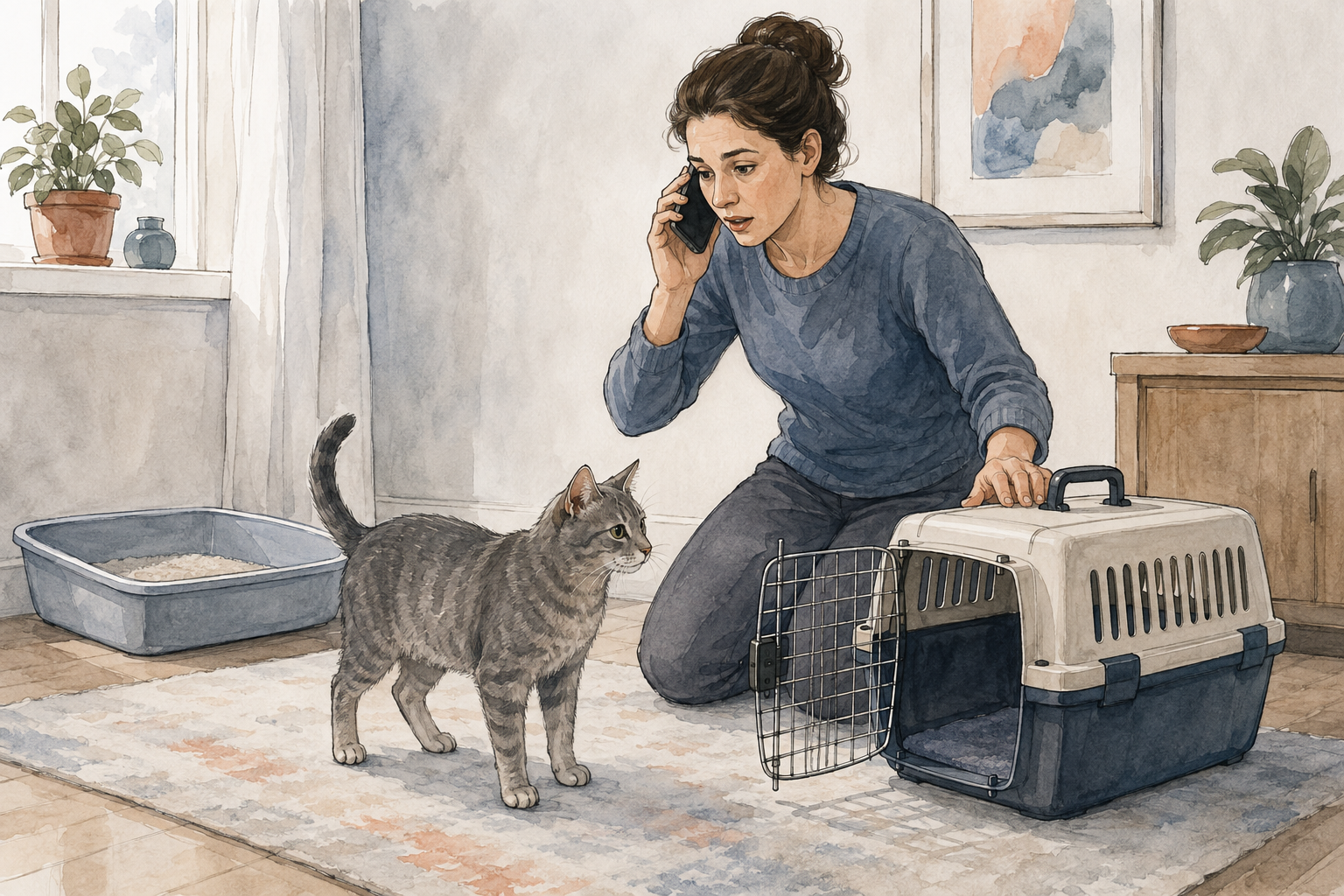
A TRUE EMERGENCY
A blocked urethra prevents urine from leaving the body.
Pressure, kidney injury and dangerous electrolyte abnormalities can develop. Cats may initially appear restless or make repeated litter-box trips, then become painful, weak, vomit or collapse.
Go to an emergency veterinarian now
- Repeated straining with no urine or only drops
- Frequent litter-box trips, crying or licking the genital area
- Urine outside the box with discomfort
- A firm painful abdomen, hiding or agitation
- Vomiting, weakness, collapse or profound quietness
Avoid actions that delay lifesaving care
- Do not press or squeeze the bladder.
- Do not give leftover antibiotics or pain medicine.
- Do not assume the cat is constipated.
- Do not wait overnight for a regular appointment.
- Do not offer food or force water if emergency anesthesia may be required; call for instructions.
Evaluation and stabilization are individualized
The veterinary team may assess the bladder, blood electrolytes and kidney values, stabilize heart or circulation problems, provide pain relief, relieve the obstruction with a urinary catheter and monitor urine production. Imaging or urine testing may help identify stones or other contributors.
Reducing recurrence requires a diagnosis-based plan
- Feed the exact therapeutic diet when one is prescribed.
- Increase water access and use wet food when appropriate.
- Provide clean, accessible litter boxes in quiet locations.
- Reduce environmental stress and resource conflict.
- Give medication exactly as directed and attend rechecks.
- Return immediately if straining or reduced urine recurs.
TRUSTED SOURCES
Sources behind this guide
Source links are provided so readers can review the underlying guidance. Publication dates and recommendations can change; confirm individual plans with the treating veterinary team.