← Back to symptom navigator

SYMPTOM → WHAT DO I DO?

Difficulty urinating

Repeated attempts with little or no urine are a veterinary emergency.

EMERGENCY SIGNS REQUIRE IMMEDIATE CARE
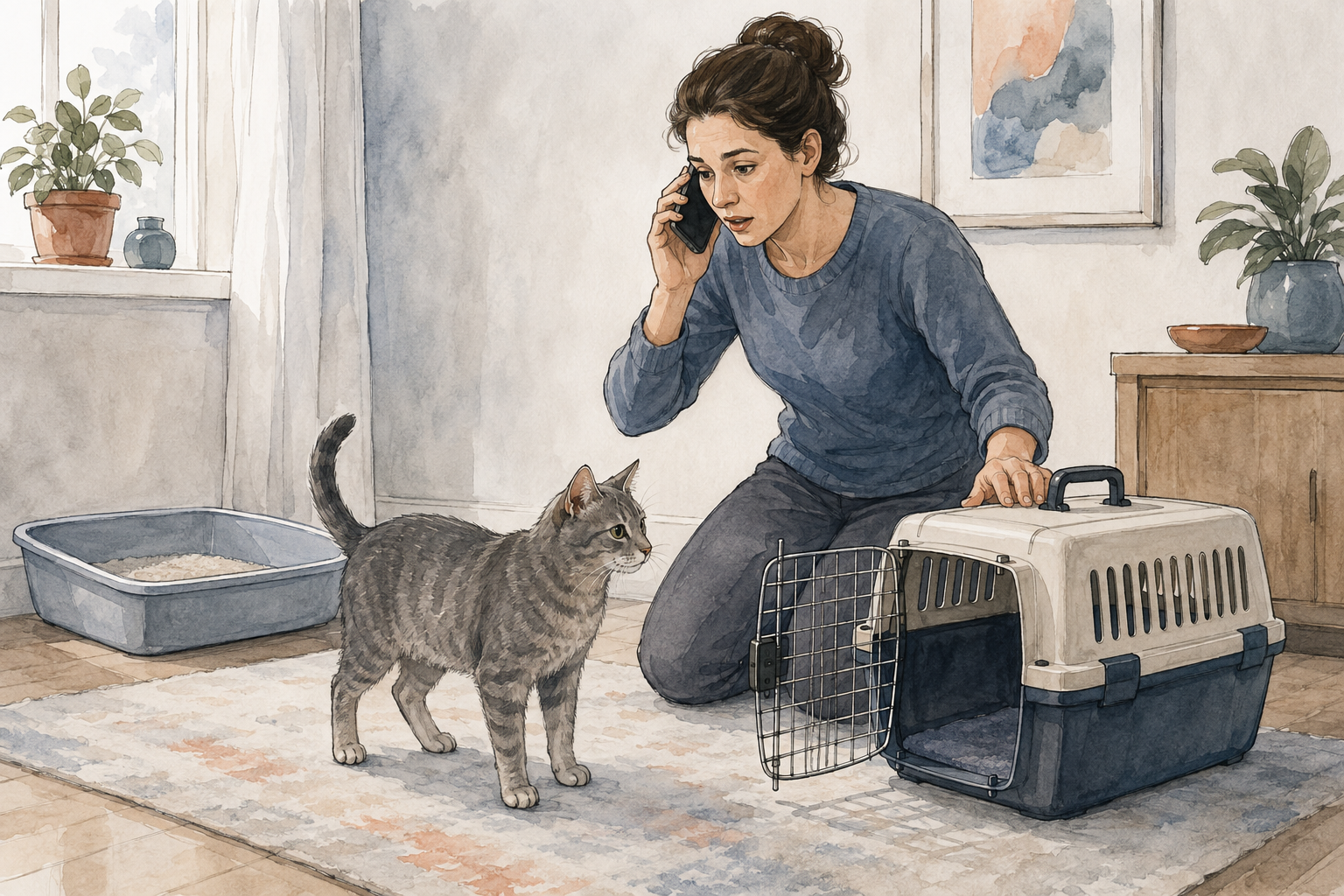
Illustration of a cat beside a urinary system diagram
OWNER VISUAL GUIDEUrinary signs can become urgent quickly, especially when an animal cannot pass urine. This educational illustration is not a diagnostic image.

READ THIS FIRST

Observations can help your veterinarian. They cannot rule out an emergency.

Contact an emergency veterinary facility immediately for difficult breathing, collapse, ongoing seizures, inability to urinate, major bleeding, abnormal gum color, sudden severe abdominal swelling or rapidly worsening weakness.

01 · POSSIBLE CAUSES

What could be behind this symptom?

These are possibilities, not a diagnosis. The right explanation depends on the examination, species and medical history.

  • Urinary obstruction from a plug, stone or swelling
  • Inflammation, urinary infection or painful bladder disease
  • Prostate disease, neurologic problems or trauma
  • Stones, sludge or reproductive tract disease
02 · WHAT YOU CAN OBSERVE

What can you safely check at home?

Write down what you see and bring photographs or video only when doing so does not delay care.

  • Whether any meaningful urine is actually produced
  • Repeated litter-box trips, squatting, vocalizing or licking
  • Abdominal discomfort, vomiting, hiding, weakness or restlessness
  • Sex, species and any history of stones or urinary disease
03 · WHAT NOT TO DO

Avoid actions that can make things worse.

  • Do not assume straining means constipation.
  • Do not press on the abdomen or attempt to empty the bladder.
  • Do not give leftover antibiotics, pain medicine or supplements.
  • Do not wait overnight if little or no urine is produced.
04 · WHEN TO CALL

When should you contact your veterinarian?

  • Call immediately and describe the last observed normal urination.
  • If urine output is absent, go to an emergency hospital while someone calls ahead.
  • Transport the animal calmly and bring current medication information.
05 · WHEN IT IS AN EMERGENCY

Get emergency help immediately if you see:

  • Repeated attempts with little or no urine
  • A painful, swollen abdomen, vomiting, collapse or severe weakness
  • Any male cat showing possible urinary blockage
Open the emergency action guide →
06 · SPECIES-SPECIFIC CONCERNS

The same symptom can mean different things in different animals.

Cats

A blocked male cat can deteriorate rapidly and must be seen immediately, even if the owner first suspects constipation.

Rabbits & small mammals

Straining, bloody urine or gritty sediment can indicate painful bladder disease; prompt species-experienced care is needed.

Livestock

Male goats and sheep are vulnerable to urinary obstruction; straining or a stretched-out stance is an emergency.

Related Resources

Feline Urinary ObstructionFeline lower urinary tract diseaseUrinalysisDiagnostic testing libraryWhen it is an emergency
TRUSTED SOURCES

Sources behind this guidance

American Veterinary Medical AssociationFirst aid tips for pet owners and limits of home careMerck Veterinary ManualVeterinary professional and pet-owner disease referencesMerck Veterinary Manual: urinary obstructionWhy urinary blockage in cats requires immediate veterinary attention

These educational resources support a conversation with your veterinary team. They do not replace examination, diagnosis or species-specific emergency care.