CATS · OWNER EDUCATION
Feline Lower Urinary Tract Disease
A group of bladder and urethral problems that can cause straining, frequent urination, blood in urine and, in some cats, a life-threatening blockage.
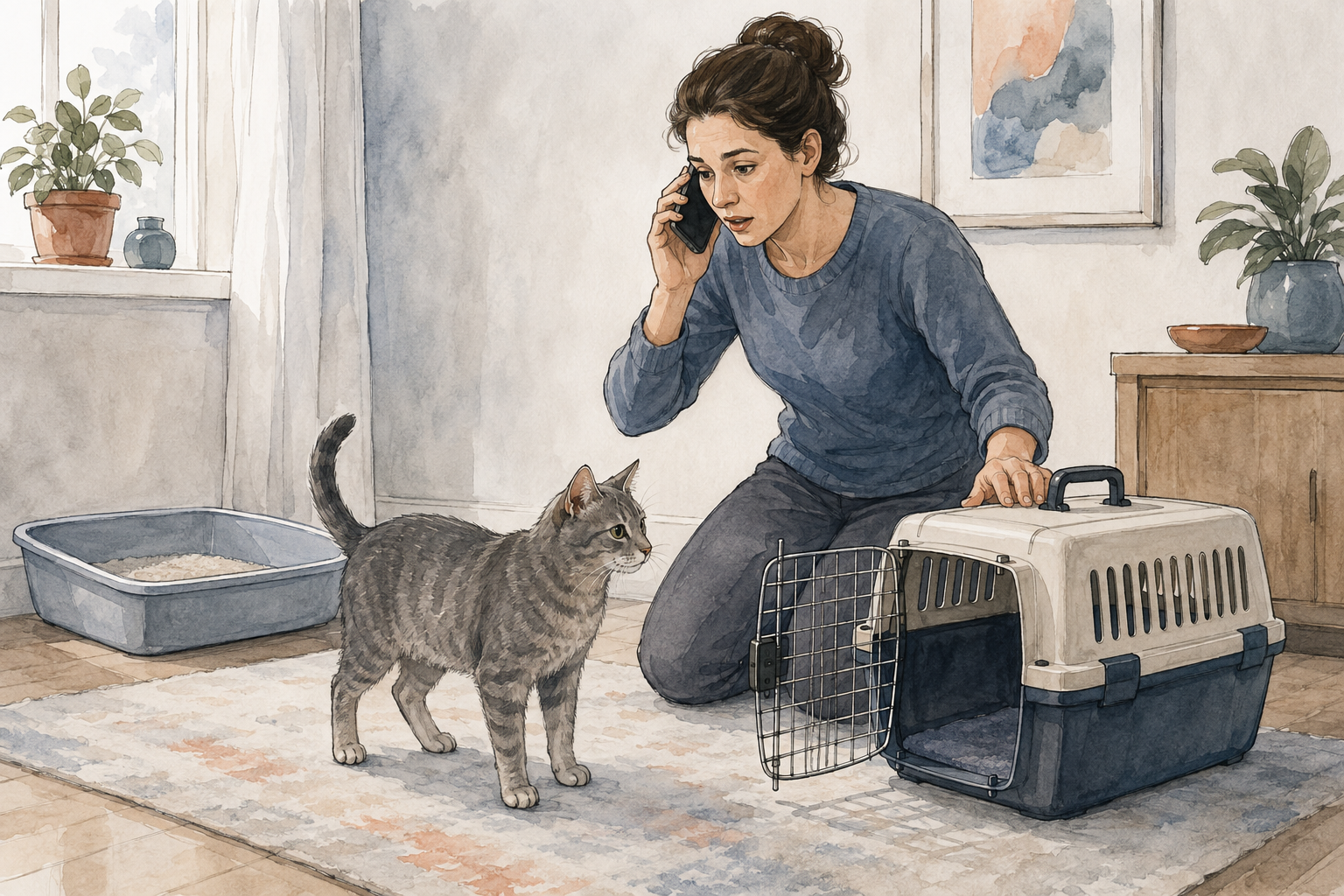
THE SHORT VERSION
Understanding supports better veterinary conversations.
Feline lower urinary tract disease describes several possible problems rather than one single infection. Stress-associated bladder inflammation, crystals, stones and urethral obstruction may produce similar signs.
What is this condition?
Feline lower urinary tract disease describes several possible problems rather than one single infection. Stress-associated bladder inflammation, crystals, stones and urethral obstruction may produce similar signs.
Which animals can be affected?
Risk factors, examination findings and management can differ between species and individual patients.
Why can it happen?
- Bladder inflammation, environmental stress, urinary stones or urethral plugs.
- Less commonly, infection or another structural condition depending on age and history.
- Water intake, household environment and prior urinary episodes can influence risk.
What might an owner notice?
- Frequent litter-box visits, straining, small urine amounts or urinating outside the box.
- Blood in urine, genital licking or vocalizing.
- Reduced appetite, hiding or abdominal discomfort.
How is the problem investigated?
- Physical examination and urinalysis.
- Urine culture, radiographs or ultrasound when clinically appropriate.
- Immediate assessment of whether the cat can actually pass urine.
What might treatment involve?
- Treatment selected for the identified cause, including pain management and environmental planning.
- Hydration, nutrition adjustments or stone management when recommended.
- Immediate emergency stabilization and urinary decompression for obstruction.
This is an overview, not a prescription or a recommendation for a specific individual animal.
What can owners do at home?
- Monitor actual urine production rather than assuming straining is constipation.
- Support fresh water access and a calm, clean litter-box environment.
- Follow prescribed diet, medication and recheck instructions.
Avoid actions that could make care less safe.
- Do not press on the abdomen or attempt to express the bladder.
- Do not wait overnight when a cat repeatedly strains without producing urine.
- Do not give human medications, leftover prescriptions or supplements without veterinary approval.
- Do not stop, increase, decrease or double prescribed medication without contacting your veterinary team.
- Do not delay assessment if symptoms are worsening, the animal stops eating or an emergency sign appears.
What can the longer-term outlook involve?
Outcome depends on the underlying cause and how quickly an obstruction or serious complication is treated; recurrent cases benefit from an individualized prevention plan.
Can risk be reduced?
- Discuss hydration, litter-box access, environmental stress and individualized nutrition with the veterinarian.
When should you arrange care?
- Call promptly for blood in urine, frequent attempts to urinate or painful urination.
Seek emergency veterinary care if you notice:
SEEK EMERGENCY VETERINARY CARE- Repeated straining with little or no urine, vomiting, weakness, a painful abdomen or collapse.
Sources behind this guide
Cornell University College of Veterinary Medicine: feline health topicsPrimary veterinary or veterinary-university guidance ↗American Animal Hospital Association veterinary guidelinesPrimary veterinary or veterinary-university guidance ↗Content last reviewed: August 23, 2026. Review status: veterinary-informed; independent veterinarian review not yet completed.