
Cats
Urinary blockage, especially in a male cat, can progress quickly and requires immediate emergency care.
SYMPTOM → WHAT DO I DO?
Notice color, odor, frequency, accidents, straining and whether urine is actually produced.
CALL YOUR VETERINARIAN PROMPTLY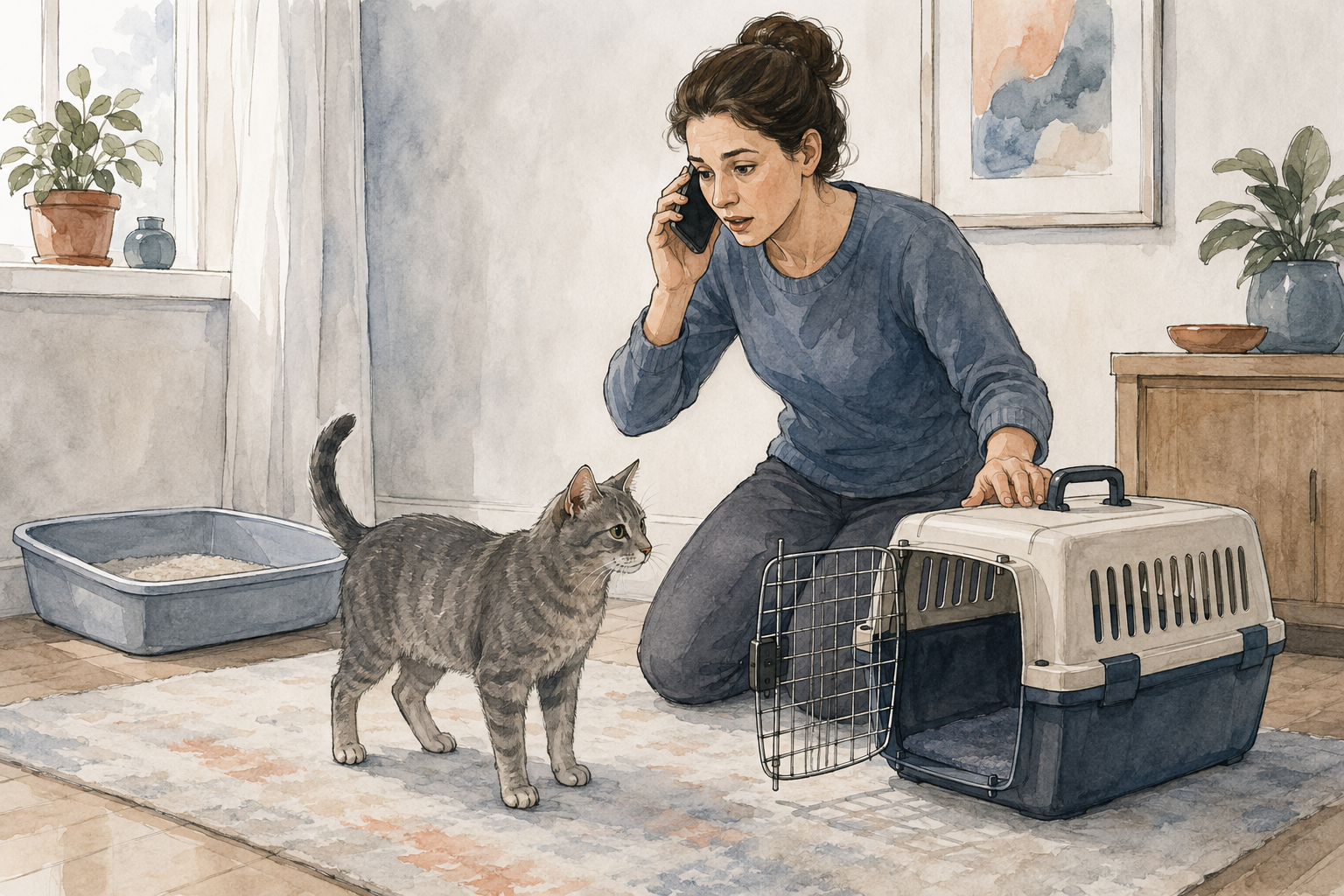
READ THIS FIRST
Contact an emergency veterinary facility immediately for difficult breathing, collapse, ongoing seizures, inability to urinate, major bleeding, abnormal gum color, sudden severe abdominal swelling or rapidly worsening weakness.
These are possibilities, not a diagnosis. The right explanation depends on the examination, species and medical history.
Urine appearance is affected by species, concentration, pigments, and other factors. Color alone cannot reliably distinguish harmless variation from blood or disease. The amount passed, discomfort, frequency, and the animal's general condition are equally important. A urinalysis can provide information not visible to an owner. Repeated unsuccessful attempts or illness with urinary changes need prompt advice rather than waiting for a clearer color change or a convenient sample.
Inflammation is the body's response to irritation or injury. It can produce swelling, discomfort, and changes in how an organ works, but the word does not identify the cause. Infection, immune activity, trauma, and other processes can all cause inflammation. This distinction matters because an antibiotic treats susceptible bacteria, while inflammation caused by a different process needs a different plan. A temporary improvement in redness or discomfort does not, by itself, establish which cause was present.
An infectious illness depends on both the organism and the animal's ability to resist it. Exposure does not always produce the same severity of illness in every animal. Age, previous immunity, nutrition, stress, and concurrent disease can influence the outcome. The infection may also cause complications that need treatment separately from the organism itself. For example, correcting fluid loss or supporting breathing can be essential even when a targeted medicine has already been started.
Platelets help form the first seal at an injured blood vessel, while clotting proteins help strengthen that seal. Problems with either system can cause bleeding, but they require different tests and treatment decisions. A platelet count is interpreted alongside the blood smear, because clumped platelets can make an automated count misleading. Visible bruising does not reveal whether bleeding is also occurring inside the body. The examination, blood-cell results, and any indicated clotting tests help the veterinarian assess the whole picture.
Write down what you see and bring photographs or video only when doing so does not delay care.
The most useful home observations compare an animal with its own usual pattern. Record intake, output, weight where practical, activity, and comfortable function at consistent times. Normal variations differ between species and life stages. A brief record can reveal a trend that is difficult to remember accurately or reproduce during an appointment. It also helps assess treatment response. Sudden serious changes still need immediate advice; collecting a perfect record should never delay care.
A care plan is easier to follow when expected changes are concrete. Ask which signs should improve, what ordinary functions should return, and how soon the team wants an update if that does not happen. Some problems need repeat measurements or examination even when the animal looks better. Record changes consistently and report new signs separately. A recheck evaluates response, complications, and treatment safety, rather than simply deciding whether to repeat the original prescription.
Urinary blockage, especially in a male cat, can progress quickly and requires immediate emergency care.
Rabbit urine may vary in pigment, but painful straining, sludge, clots or illness is not normal.
These educational resources support a conversation with your veterinary team. They do not replace examination, diagnosis or species-specific emergency care.